
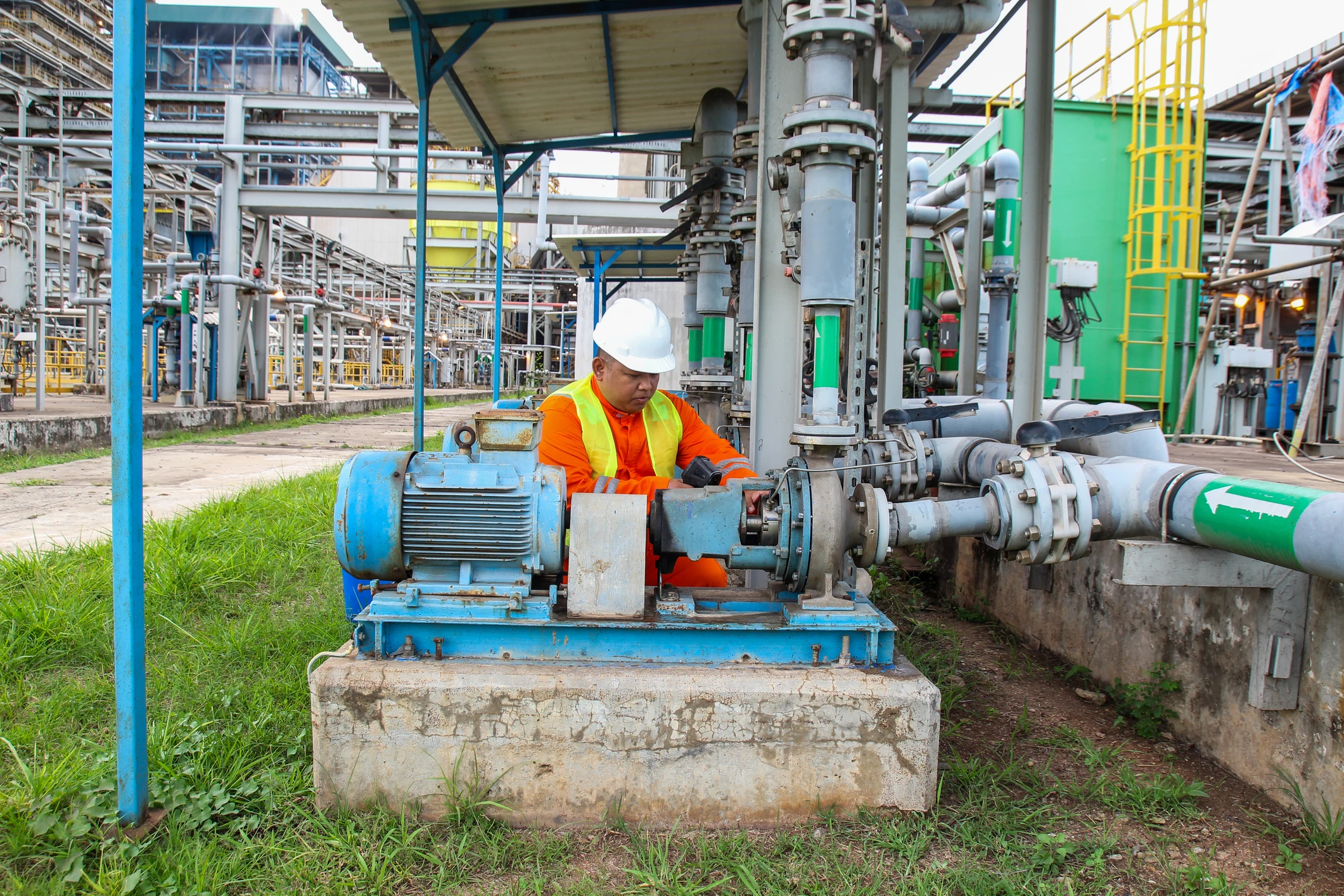
Industrial plants and agencies turn to pump replacement when a unit keeps failing after rebuilds, runs below its original test curve, or no longer fits its duty point.
Pump systems often have a service life of 15 to 20 years. Powers Pumps reviews operating data, existing connections, and repair feasibility before quoting the field work.
Pump Replacement When a Rebuild No Longer Makes Sense
Pump replacement is the removal of a worn, failed, or outdated pump and the installation of a new unit to restore rated flow and pressure. For municipal utilities and industrial plants across Southern California, replacement usually follows a pattern: a vertical turbine rebowled twice that repeatedly pulls low flow, or a sewage pump on its third mechanical seal this year.
Replacement is recommended when the tear down and inspection report shows a rebuild won’t hold. Powers Pumps operates an in-house machine shop, so our recommendation comes from the inspection findings. When they show a new unit is more practical, our field crew handles the removal and installation as part of our on-site pump repair services.
Find Out Whether a Rebuild or a Replacement Fits
Send the pump tag, original test curve, operating data, and failure history. The tear down and inspection report then answers your questions in writing.
Pump Replacement From Pull-Out to Startup
Pump replacement runs from pull-out of the failed unit to startup of the new one. Each job involves pump removal, inspection of the foundation and connecting piping, setting the new pump, alignment to the driver, piping reconnection, testing and confirmation that the equipment runs correctly before the crew leaves the site.
The field crew pulls the existing unit for tear down, sets the replacement, and checks alignment and pipe strain where applicable. A clear scope is provided with piping, electrical, and controls interfaces identified where they affect the changeout.
On-site pump replacement varies on how much of the existing unit stays. Matching flange locations let the new unit set on existing anchors with shims and laser alignment. A different footprint or setting depth adds spool pieces, baseplate work, or field machining. Before leaving, the crew tests pump operation under the agreed conditions. The job scope defines what readings to record and whether the facility requires witnessed tests or commissioning records. You will get a document on file detailing the retired pump.
What Changes After a New Pump Goes In
A pump replacement ends the repair cycle and restores the performance it was selected for. The biggest payoff is visible in the power bill, the maintenance log, and the flow readings.
Efficient Power Draw
Current hydraulic designs, premium efficiency motors, and VFD control move the same flow with less power than a worn unit with opened clearances. The pump life cycle cost guide from the U.S. Department of Energy, the Hydraulic Institute, and Europump cites studies showing an estimate of 30% to 50% potential energy savings in pumping systems through equipment or control changes.
Fewer Unplanned Shutdowns
A pump changeout addresses the cause of recurring seal or bearing failures, resulting in longer intervals between scheduled outages. A pump that has failed three times in a year will fail again on its own schedule. The same pump life cycle cost guide notes that lost production from unexpected downtime can rival energy and replacement-parts costs.
Rated Flow and Pressure Restored
Worn impellers, eroded volutes, and opened wear ring clearances restrict flow and affect output consistency. A new unit delivers rated performance from the first run, restoring process control and wet well drawdown.
Repair Spend That Stops Compounding
Each rebuild on a unit near the end of its service life buys less time than the last. Pumping systems often have a service life of 15 to 20 years and past that window, cumulative repair spend can match the price of a new pump.
Safer Equipment for Operators
Leaking seals, cracked casings, and heavy vibration create exposure for crews that work around the equipment. Replacement removes the hazard at its source.
A Pump Sized to Current Duty Point
A DOE case study recorded an 80% energy drop after replacing oversized booster pumps with right-sized units. A replacement fitted to the current duty point removes the throttled valves and workarounds that compensate for an outdated selection.
You get a pump matched to the system it serves, with the documentation to justify performance.
Weigh Replacement Against a Rebuild Quote
What to Check Before Replacing a Pump
Check for system failure signs in the unit’s performance before replacing a pump. Pump replacement is ideal when performance does not recover after an overhaul, failures return faster each cycle, or cumulative repair spend is comparable to the price of a new unit.
- Performance Against the Original Test Curve: System flow and pressure stays below the curve after an overhaul. It signals the pump works harder for the same demand.
- Power Draw for the Same Output: Higher power draw at the same duty point points to declining hydraulic efficiency or internal component wear.
- Cavitation and Vibration After a Rebuild: Knocking, grinding, or vibration sound after a rebuild can indicate damaged internal geometry or bearing wear.
- Leak and Contamination History: Recurring leaks after a seal replacement, casing cracks confirmed at tear down, or water left in the oil chamber indicate wear beyond a standard repair.
- Pump Breakdown and Rising Repair Spend: Repeated unplanned stops push repair spend toward the price of a new unit.
- Hydraulic Design Against the Current Duty: When the original selection no longer matches the system’s flow, head, or fluid, rebuilding to that design keeps the mismatch in service.
Check the system before deciding the replacement. Head restrictions, a change in fluid viscosity, abrasive solids, or insufficient NPSH produce the same symptoms. A new pump at the same selection would cavitate or wear the same way.
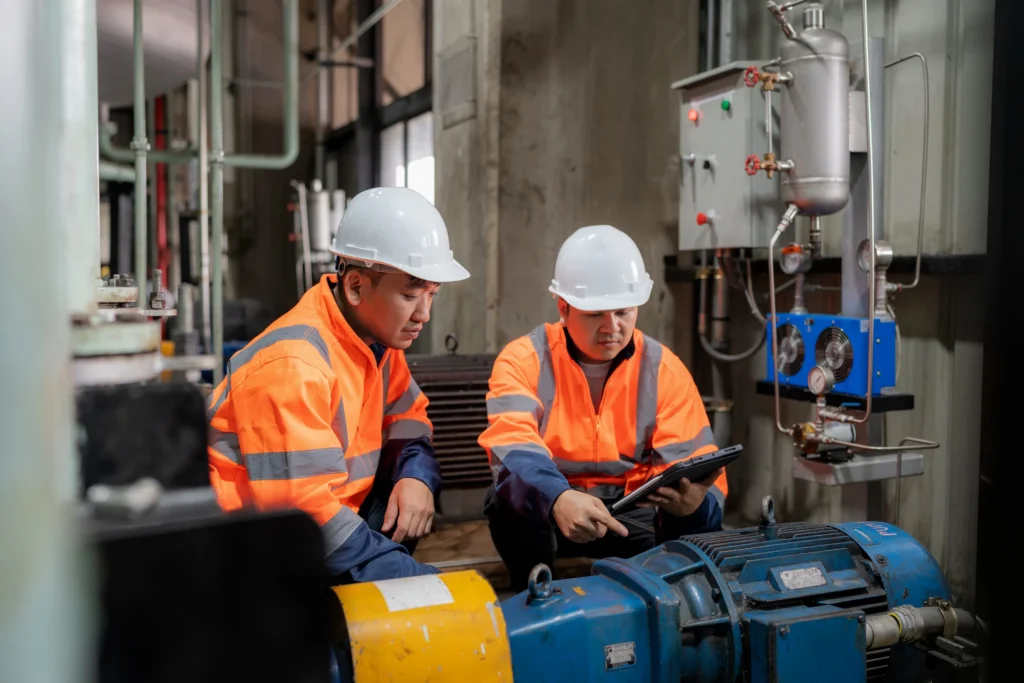
Replacement for Water, Wastewater, and Industrial Pumps
Replacement for water, wastewater, and industrial pumps follows different approaches based on what parts are still serviceable. The foundation, driver, piping and whether the original selection fits the current duty drive each job.
| Approach | What Gets Replaced | Best Fit | Main Tradeoff |
|---|---|---|---|
| Direct Replacement | Complete pump, same model or OEM equivalent. | Split case, end suction, and submersible sewage pumps with an unchanged duty. | Carries forward any mismatch with the system. |
| Re-Selected Pump for the Current Duty Point | Complete pump, sized to current flow and head. | Lift stations and wells where demand or head has changed. | Can add piping, baseplate, or motor work. |
| Pump End Replacement on the Existing Driver and Base | Bowl assembly or wet end; motor and base retained. | Vertical turbine and end suction units with a sound motor and discharge head. | Viable only when retained components pass inspection. |
| Replacement With Field Machining at the Mounting Interface | Complete pump, with the mounting fit field machined. | Positive displacement and horizontal units with a mismatched footprint or flange face. | Adds machining time to the outage. |
Pump end and component orders run through the pump replacement parts line. For complete units, Powers Pumps is not tied to one manufacturer. Each selection follows the pump’s duty point rather than a single catalog.
What Drives the Price of a Pump Replacement
The installation conditions drive the price of a pump replacement as much as the unit itself. Powers Pumps quotes each job per scope.
- Pump Type and Horsepower: Larger units and vertical turbine assemblies carry higher equipment cost and longer manufacturer lead times.
- Setting Depth and Access: Deep well settings, wet wells, and below-grade pump rooms add crane time, rigging, and confined space entry.
- Foundation Condition: A sound base needs shims and alignment. A damaged or mismatched base adds cost for grouting, fabrication, or field machining.
- Piping Changes: Different flange locations or discharge orientation require spool pieces and supports.
- Motor and Drive Scope: Retaining the motor holds the scope down, while a new motor or VFD extends it.
- Disposition of the Old Unit: Rebuilding it as a spare adds machine shop work. Retiring and replacing it adds removal and disposal.
An on-site inspection and review of the nameplate data provide the information for a clear, written scope.
On-Site Pump Replacement Backed by In-House Machining
Powers Pumps backs each on-site pump replacement with an in-house machine shop in Montebello. Milling, lathe, grinding, boring, and honing are done under one roof, not transferred between contractors. The pulled pump goes there for tear down, and the machinists who work on the unit are the same ones who rebuild what can be saved.
Our Montebello machine shop also keeps a replacement recommendation honest. When the OEM quotes a long lead time on a discontinued impeller or wear ring, our machinists reverse engineer the part and cut it in-house at lower lead time and cost. A unit we recommend replacing has failed on condition, not on parts availability.
We have done this work since 1976 as the pump repair and distribution arm of Powers Bros. Machine, with field replacement services under California contractor license #1021366 (D-21 Machinery & Pumps). Every job is backed by a one-year warranty. Our LSBE certification supports eligibility on municipal and public agency bids.
Real Feedback From Plant and Utility Teams
⭐⭐⭐⭐⭐
“This place does not disappoint. From the account managers, all the way to the guys on the floor doing the work. Awesome service and very quick yet reliable turn around times. Thank you guys for always getting my pumps and or machine work out in time.”
– Matt M., Verified Customer
⭐⭐⭐⭐⭐
“I took a vertical turbine pump to Powers Pumps to be identified and replaced. They provided me with a detailed inspection report of their findings, recommendations, sizing, and pictures. They were able to quote me a new one but the lead time was ridiculous, at the same time they quoted a repair to my customer’s old pump. They were able to repair his old pump at half the price but more importantly a fraction of the lead time of the new pump. From start to finish they got it back to me in two weeks…”
– Todd L., Verified Customer
Compare the Replacement Quote You Already Have
Send any quote you have. We will review the scope against a rebuild option and tell you which one holds up.
Field Replacement Coverage Across Southern California
Our field crews complete pump replacement out of the Montebello shop in Los Angeles County. We work with industrial facilities and agencies across Orange, Riverside, San Bernardino, Ventura, San Diego, Kern, and Santa Barbara counties.
Typical sites include treatment plants, lift stations, groundwater wells, and process facilities. Check our full coverage details on our Service Area page.
Pump Replacement FAQs
How long does a pump replacement take?
Field time for a pump replacement depends on setting depth, site access, and how much of the existing installation stays. Lead time on the new unit is often the longer factor and is confirmed at the quote stage. A pump end replacement on a retained driver usually shortens the outage. Timeline estimate is detailed in the written scope.
How much does it cost to replace an industrial pump?
Industrial pump replacement is quoted per scope rather than at a flat price. Pump size, setting depth, piping changes, and motor work vary more between jobs than the pump itself does. Send Powers Pumps the nameplate data, duty point, and site photos or drawings. You will receive a clear, written scope of work and quote.
When is replacement better than a rebuild?
Pump replacement is often recommended once repair costs pass about 50% of a new pump’s cost. Repair is usually a better choice when the casing, shaft, and driver are sound and the original selection still fits the intended duty. The tear down and inspection report gives you a detailed look before you make the decision.
Can a vertical turbine pump be replaced without replacing the column and discharge head?
Yes, when the column, line shaft, and discharge head pass inspection. A vertical turbine pump replacement can be limited to the bowl assembly, which keeps the existing setting and discharge piping in place. Column and line shaft condition is checked when the unit is pulled, and anything that fails inspection is added to the scope.
Do you supply the new pump, or do we purchase it separately?
We supply the new unit as part of the replacement scope, along with the motor when the job calls for one. Product categories are listed on our new industrial pumps and motors page. Each recommended selection is matched to the intended duty point.
Get a Replacement Recommendation You Can Take to Your Board
Send the nameplate data and the failing symptoms your crew has logged. Our crew will visit the site, inspect the pump, and provide a written scope of work and recommendation whether a rebuild or replacement is viable. No commitment attached.
Reach us through our contact page, phone us at (888) 870-0125, or email us at Sales@PowersPumps.com. Monday through Friday, 7:00 am to 3:30 pm.