
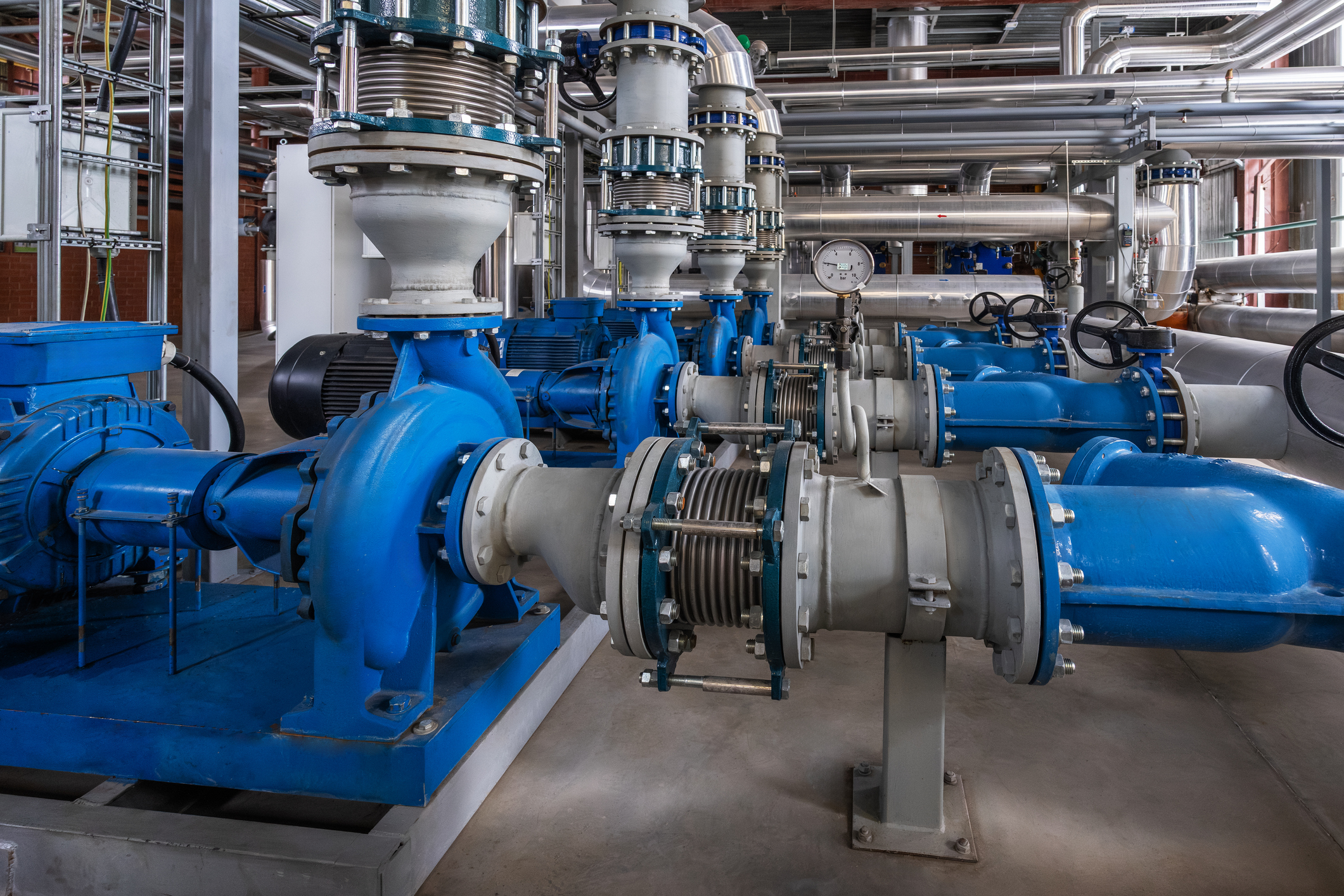
Agencies and plants need full pump system installation when adding a pump station, replacing a failed unit with new equipment, or retrofitting an existing station.
Field time is set in the written scope, with crews working Monday through Friday, 7:00 am to 3:30 pm. Powers Pumps quotes each installation per scope.
Pump System Installation Built to Run at Its Duty Point
Pump system installation is the foundation, mounting, alignment, piping, and commissioning work that integrates pumps with valves, drives, and controls. Before installation, the pump curve is checked against the required flow, head, and actual suction conditions. For water and wastewater agencies, lift station operators, and industrial plants across Southern California, that keeps the system delivering its design flow and pressure.
Powers Pumps reviews the specified duty point alongside the site layout and tie-in dimensions. We treat the installation as one scope, not a pump set in place. We install from the same Montebello shop that tears down and rebuilds pump units, and our field crew sets equipment to run at its duty point.
Send the Pump Schedule and Tie-In Drawings
Send us the pump schedule, tie-in drawings, or the unit’s nameplate and we will create the scope of work.
What the Installation Scope Covers
A standard pump system installation covers the work for new stations, capacity upgrades and retrofits. From foundation to start-up, it includes base preparation, setting the baseplate, skid, or discharge head, pump and driver alignment, suction and discharge piping with valves and supports, and commissioning.
What differs is how much of the system is already in place. Replacing a pump on a sound foundation can come down to anchor bolts, shims, a spool piece, and alignment. A new station or retrofit adds foundation work, new piping runs, valve sets, and the control tie-in. Removal of the existing equipment is typically part of the scope.
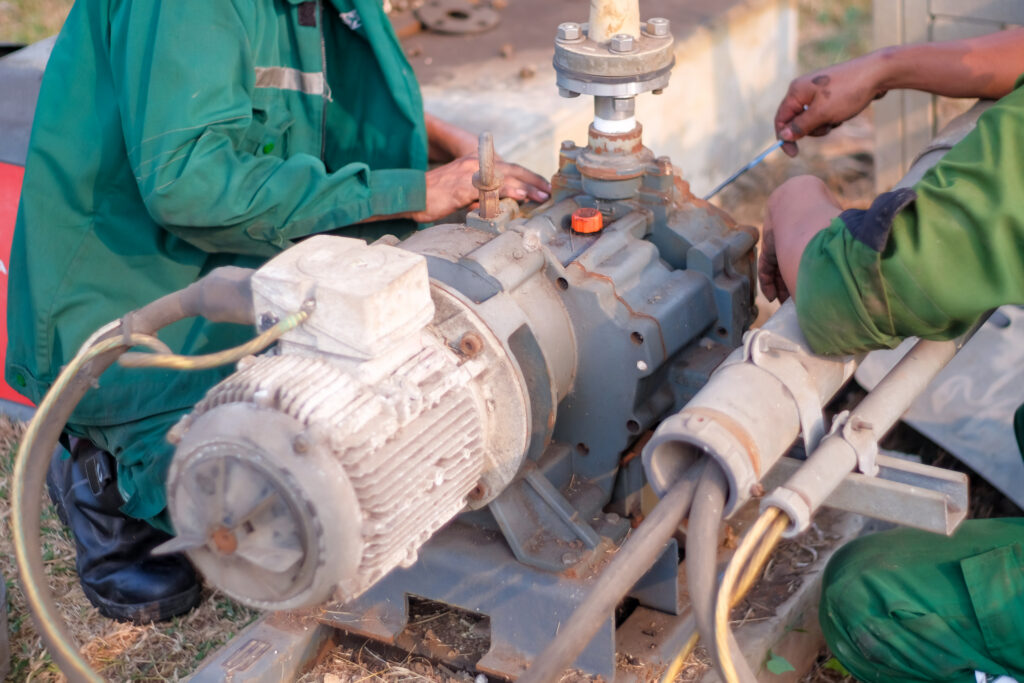
Each installation follows a detailed scope before the crew mobilizes. Installations are handled by the field crew behind the on-site pump repair services. The crew that pulls and repairs pumps on site is the same one that installs the system.
Stable Operation From First Run to Routine Service
A professionally installed system holds its duty point, provides the right mechanical fit, and is confirmed running correctly before the crew leaves. That gives operations a known starting point once the system is in service.
Lower Energy Cost Over the Life of the System
A unit that holds to its duty point saves money every year it operates. Correct sizing, VFD setup, and precise shaft alignment keep the pump near its best efficiency point instead of throttling against a partly closed discharge valve for the next decade.
Longer Intervals Between Rebuilds
Strain-free piping, a grouted base, and precise alignment take the vibration load off mechanical seals, bearings, and couplings. Correct suction conditions also limit cavitation on impellers and wear rings. The new pump runs longer between seal replacements and full pump rebuilds.
Fewer Unplanned Outages Year After Year
Commissioning catches air locks, reversed rotation, pressure problems, or alignment errors that get fixed, not left to turn into recurring failures. Maintenance shifts to planned work on a schedule the budget can absorb, rather than pulls that interrupt service.
Safety, Compliance, and Warranty That Hold Up
Correct electrical connections, coupling guards, and lockout/tagout points lower shock, fire, and entanglement risk. An installation done to the manufacturer’s requirements also keeps the OEM warranty valid, since misalignment and pipe strain are common grounds for a denied claim.
The installation often decides more of a pump system’s operating and maintenance cost than the purchase price does.
Review the Cutover Before Scheduling the Outage
The station, the tie-in points, and the work sequence are checked before any equipment is taken out of service.
From Foundation Check to Pump Commissioning
We check each stage before the next begins. This sequence matters because a missed check on leveling or pipe support often builds into each part installed after it.
- Site and Foundation Preparation: Building or verifying a level, rigid base and anchor bolt layout to match the baseplate, skid, or discharge head.
- Mounting and Alignment: Setting the baseplate or skid, grouting where required, placing the pump and motor, and laser aligning the shafts once piping is connected.
- Piping and Valve Connections: Connecting suction and discharge lines, gate and check valves, and piping supports so the casing carries no piping load.
- Electrical and Control Tie-in: Completing and checking motor connection, grounding, and any control panel, sensor, or VFD integration before power-up.
- Priming and Commissioning: Filling and venting the system, confirming the rotation, and checking flow, pressure, vibration, noise, and temperature before full operation begins.
A standard pump replacement moves through these stages, with field time set in the written scope. The process can run longer depending on pump condition, site access, and any fixes seen during the inspection. New stations and retrofits are scheduled per scope.
Pump Configurations and Installation Requirements
Each pump configuration carries its own mounting, access, and startup requirements. Powers Pumps reviews the pump schedule, OEM drawings, and site dimensions before planning the installation.
| Pump Configuration | Typical Application | Installation Focus | Main Consideration |
|---|---|---|---|
| End Suction or Split Case Centrifugal Pump | Water transfer, booster stations and process circulation. | Check baseplate flatness, coupling alignment and pipe fit. Leave room to lift the upper casing on split case units. | Alignment not checked against installed piping drifts after the first thermal cycle. |
| Submersible Lift Station Pump | Wastewater lift stations and sump systems. | Check guide rails, discharge seating and lifting access. Confirm the unit can be withdrawn for service. | Remaining entries need a confined-space-certified crew. |
| Vertical Turbine Pump | Groundwater wells and deep wet wells. | Check lift clearance for the bowl and column assembly, impeller adjustment and minimum submergence. | A wrong lift setting shows up quickly as bowl wear. |
| Positive Displacement and Packaged Skids | Viscous fluid transfer and metering. | Review inlet conditions, pressure limits and discharge relief routing against the equipment specification. | Without a verified relief path, the pump builds pressure until something gives. |
Send us the pump model and mounting arrangement and our field team reviews the equipment and its actual service clearances. For projects that call for new equipment, we supply it through the new industrial pumps and motors line.
What Drives the Installed Cost of a Pump System
Pump system installation cost depends on the mechanical work required at the site, what the facility can reuse, and how much time operations can release for the installation.
- Rigging and Access: Door openings, lift height and the path from unloading to the base affect equipment handling.
- Base and Equipment Fit: Changes to anchors, mounting plates or couplings add work. Reuse depends on condition and dimensional fit.
- Piping and Valves: Header offsets, replacement valves and additional supports affect fabrication and field labor.
- Outage and Temporary Pumping: Short work windows and phased cutovers can require additional mobilizations. A bypass adds its own setup and removal work where required.
- Acceptance Tests and Records: Witnessed tests, multiple operating points and turnover documentation affect the time required after setting the equipment.
Drawings and operating data give us a basis for pricing the mechanical scope and stating the assumptions used in the quote.
Installation Planning Backed by Field and Shop Capability
Powers Pumps holds California D-21 Machinery and Pumps Contractor License #1021366, which covers installing and repairing pumps and machinery. We are also LSBE certified, which counts toward bid preferences on municipal and public agency work.
If a retrofit calls for reusing equipment that needs repair, we document the condition, findings and recommendations in a tear down and inspection report. The Montebello machine shop supports the field team with restoring a mounting fit or machining an obsolete adapter. Beyond installation, we also provide field machining, fan shaft repair, blower and compressor repair, and thermal coating capabilities.
Feedback From Plant and Utility Teams
⭐⭐⭐⭐⭐
“The customer service was great, I was getting updates throughout the entire process. It would have taken 10-12 weeks to get a new one from the manufacturer, time we did not have. I highly recommend these guys and I will be using them again.”
– Todd L., Verified Customer
⭐⭐⭐⭐⭐ “These guys are great. 3rd generation of industrial repair machinist’s and mechanics. Those Powers brothers can fix anything.”
– T. R., Verified Customer
Walk Through the Installation With the Field Team
Review the access route, tie-in locations and proposed field schedule with the field team before locking in the outage.
Pump System Installation Across Southern California
From our Montebello shop, Powers Pumps serves water and wastewater plants, lift stations, stormwater pump stations, groundwater wells and industrial facilities across Southern California. We cover Santa Barbara, Ventura, Kern, Los Angeles, Orange, San Diego, Riverside and San Bernardino counties.
Proximity to the machine shop matters on replacement projects. A pulled unit can go straight to Montebello for tear down and inspection while the new system is commissioned. See our service areas for coverage details.
Pump System Installation FAQs
How much does pump system installation cost?
Powers Pumps quotes pump system installation after reviewing the equipment and site requirements. For a bid comparison, ask each bidder to show setting and alignment, piping tie-ins, and startup testing as separate items where applicable. That makes it easier to see how each quote handles the same equipment and outage plan.
How long does a pump system installation take?
A straightforward pump replacement is the shortest install, with field time set in the written scope. Pump condition, limited access and changes to the tie-ins can extend the schedule. Powers Pumps reviews those factors and the proposed outage window when estimating field time. Equipment and fabrication lead times are scheduled separately.
Should we rebuild our existing pump instead of installing a new one?
Often, yes, if the casing, column, or discharge head is in good condition. A pump inspection with a tear down report shows whether a rebuild restores the unit to OEM specification or new equipment is a better spend. Our in-house machine shop reverse engineers obsolete parts that would otherwise force a replacement.
Can a station stay in service during installation?
Yes, a station can stay in service if the remaining trains or an approved temporary bypass can handle the required flow during the cutover. Operations should confirm the capacity available without the affected train and agree on when to pause the work or restore the operating arrangement.
Can we reuse our existing pump or motor?
Yes, existing equipment may be reused if its condition, ratings and fittings meet the new operating requirements. Send the pump curve, motor nameplate and maintenance history for review. If the project needs a repair, see our industrial pump repair services.
Get a Bid Scope for Your Pump System Installation
Send us the pump schedule, drawings, or nameplate data. We will walk the site, review foundation, piping, and access, and return a written scope of work. You will get a quote you can carry into a bid package, with no obligation to proceed.
Contact our team or email us at Sales@PowersPumps.com to request a scope. The crew setting your pump works out of the same Montebello shop that rebuilds it.