
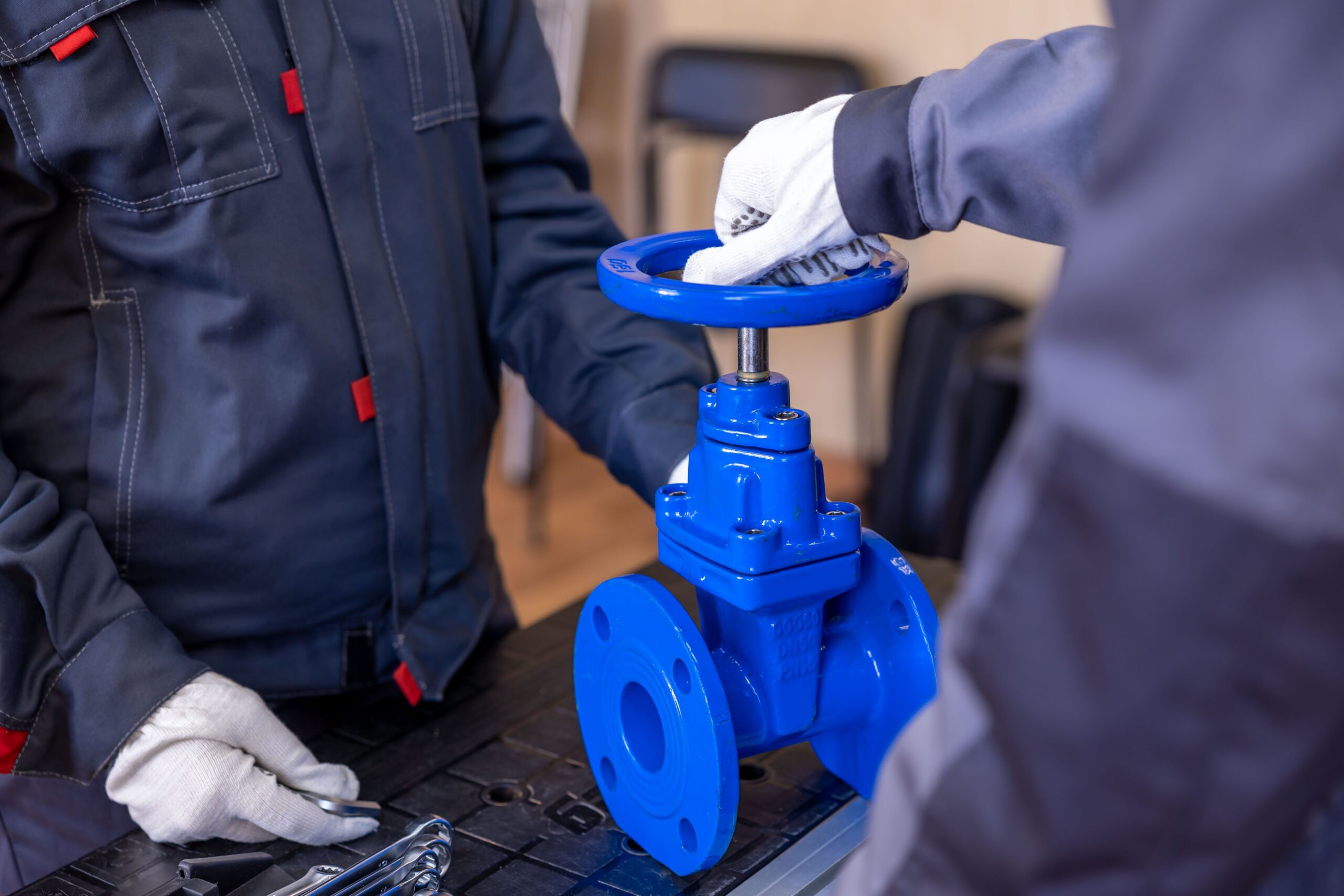
Industrial valve replacement is the right call when the body is cracked, eroded, or corroded, or when the unit is obsolete.
When the valve is sound, repair is usually faster, as a new large-diameter valve can carry lead times of 8 to 20 weeks or longer.
Powers Pumps reviews the valve data and provides a clear scope before work begins.
Industrial Valve Replacement That Restores Line Isolation
Industrial valve replacement is removing a damaged or obsolete valve from a process line and installing a new unit to restore flow, pressure, or isolation control. A gate valve that passes flow when closed can hold up work on a downstream pump. A check valve slams on every pump stop. For industrial facilities across Southern California, a failing valve turns every downstream repair into a wider shutdown. The option comes down to whether it can be repaired or has to come out, and how much downtime each path costs.
Powers Pumps reviews the valve against the line duty and shutdown plan. Our valve repair and replacement is carried out by the same field crews that pull and set pumps, backed by the Montebello machine shop. Each job starts with an inspection, not a catalog quote. If the body is sound, we recommend repair. If the pressure boundary is compromised, we replace the valve and explain why.
Tell Us Where the Valve Leaks, Binds, or Fails to Close
Share the valve type, size, and pressure class. We will tell you what the inspection confirms.
What Goes Into a Valve Repair or Changeout
A standard job covers line isolation, removal or opening of the valve, inspection of the body and internals, repair or replacement, and testing before the unit returns to service. Both options require depressurization, rigging for heavy components, and a functional test. The difference is what happens to the body.
Valve repair is the right call when the body is in sound condition and the problem lies in the serviceable parts. Repairable issues include stem packing leaks, worn seats or discs, failed O-rings and gaskets, or calibration drift on an actuated valve. Replacement is the practical option when the valve body has cracks, through-wall corrosion, erosion past safe wall limits, or structural damage, or when the repair estimate is comparable to the price of a new unit.
Each scope depends on conditions around the valve: whether the adjacent isolation valves hold, whether the valve sits in a vault, whether it carries an actuator, and whether a replacement matches existing flange drilling and face-to-face dimensions. Related pump work can be reviewed through on-site pump repair services.
What Valve Repair and Replacement Each Deliver
A valve that seats on demand lets a pump be isolated for service, keeps reverse flow off an impeller, and holds process control where operators set it. The option that gets you there depends on the actual valve condition, lead time, and what the system needs next.
Lower Cost and Shorter Lead Time
When the valve is in sound condition, repair restores seats, trim, and sealing surfaces for less than a new body. The gap also widens on large-diameter and specialty-alloy units where the body is the expensive part.
Machining or sourcing internal parts also avoids waiting on long factory lead times of 8 to 20 weeks or longer on large valves. Top-entry valve designs can sometimes take new trim without leaving the line.
Legacy Valves Stay in Service With Less Scrap
Industrial valve repair keeps obsolete valves running when no direct replacement exists, or a new valve forces piping changes. Reusing the existing body and alloy components also cuts raw material use and keeps heavy castings out of the scrap stream.
Restored Pressure Boundary and Factory Certification
A cracked, corroded, or eroded body cannot be trusted at system pressure. Once pressure-retaining parts are past repair limits, replacement is the only safe answer. The new unit starts a fresh service life with the manufacturer’s original specifications, which matters for safety-critical service and for agencies that require it.
An Upgraded Spec and an End to Repeat Failures
A new valve means a chance to change body material, trim, or seat type for higher pressure, higher temperature, or more abrasive material. When the same valve keeps coming back, or repair costs are closer to a new unit, replacement offers a better long-term value.
Our machinists recommend valve repair or replacement depending on what the inspection finds.
Get Clear Inspection Findings Before You Commit
Industrial Valve Work From Inspection to Line Release
Our field team follows a structured sequence for every valve job, whether repair or replacement is involved. The actual turnaround time is quoted per scope and confirmed once the valve is open.
- Assessment and Scope: Confirm valve type, size, pressure class, end connections, and actuation. We will identify parts and equipment that can be staged and you will get a documented scope of work.
- Isolate and Prep: Bypass or shut down the line, apply lockout/tagout, relieve the pressure, and drain the affected section.
- Disassemble: Remove the actuator or positioner, break fasteners with trapped pressure in mind, and open the bonnet or pull the valve under rigging.
- Clean and Inspect: Clear buildup, then check seats, discs, stems, springs, and sealing surfaces for wear, corrosion, and scoring. For a changeout, verify the mating connections and available clearance before fit-up.
- Repair or Install the Valve: For a repair, lap seats and discs, then replace packing, gaskets, and damaged trim. For a changeout, fit the new valve and torque flange bolts to specification.
- Test and Return to Operation: Stroke the valve, check for leaks, calibrate actuated and control valves, and bring the line back to correct pressure before releasing it back to operations.
The inspection findings stay in your documented project record. This helps when the next budget cycle asks why the money was spent.
Valve Selection for Pump Stations and Process Lines
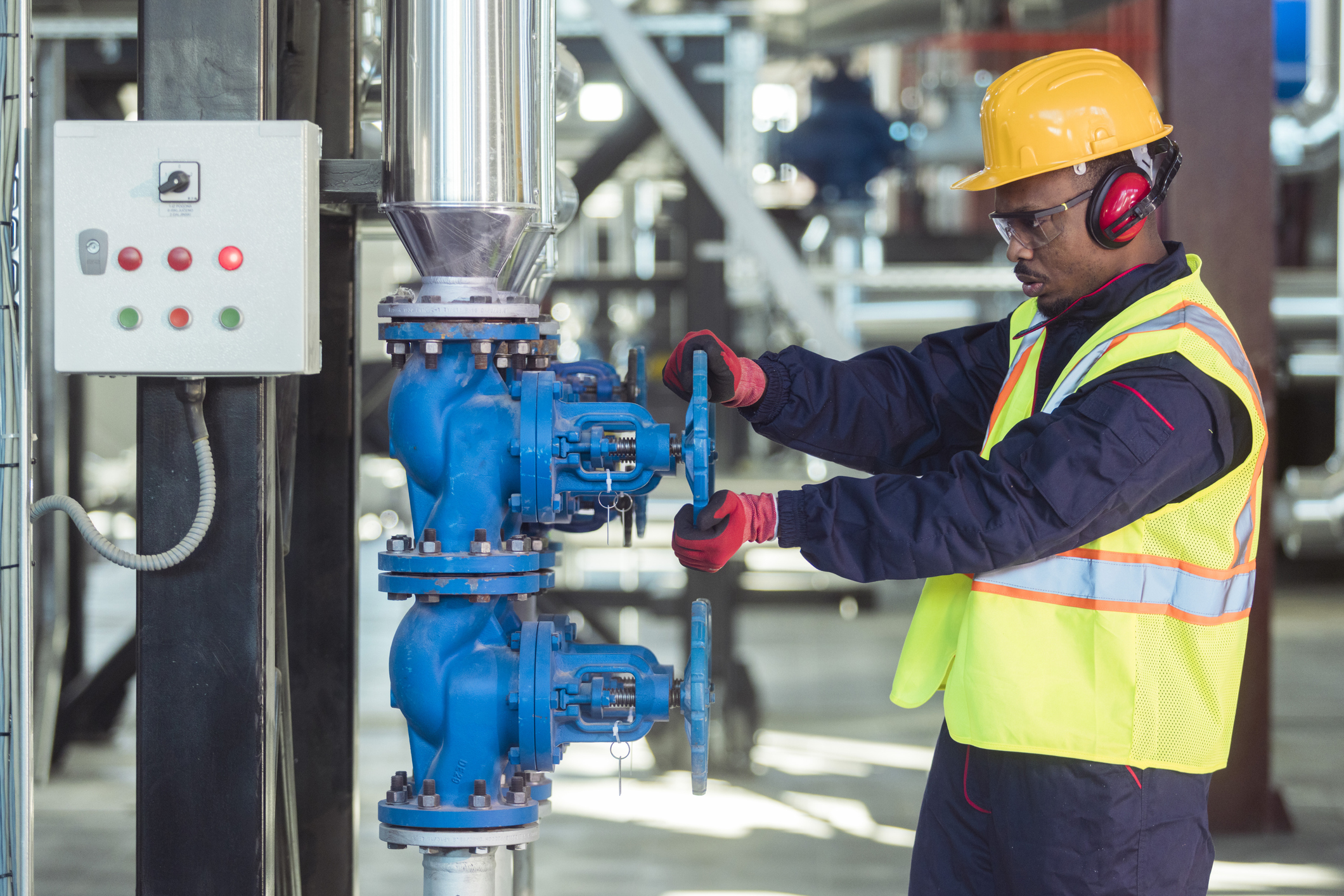
Valve selection starts with its function (isolates, throttles, or stops backflow), the media it handles, and the line’s size and pressure class. For a valve repair, these factors decide whether the existing valve stays. On an industrial valve replacement, they decide whether a like-for-like unit fits or the spec changes.
| Valve Type | Where It Runs | How It Typically Fails | Typical Repair Path |
|---|---|---|---|
| Gate Valve | Pump suction and discharge isolation, wellheads, distribution mains. | Worn seats, a wedge that binds or will not fully close, packing leaks. | Inspect the stem, wedge, and seating surfaces. Renew seals or replace the stem or wedge assembly where the design allows. |
| Butterfly Valve | Large discharge headers, filter galleries, treatment process lines. | Seat or liner wear, disc edge erosion, worn shaft bushings. | Inspect the disc edge, seat, shaft, and operator. Renew replaceable seats or shaft seals and verify full travel and shutoff. |
| Check Valve (Swing or Ball) | Lift station, booster station, and well discharge. | Slam on pump stop, worn hinge pin, fouled clapper or ball, seat leakage. | Clear obstructions and inspect the seat and closure parts. Replace worn discs, hinges, or springs where the design allows. |
| Plug Valve | Wastewater and sludge lines, with an eccentric plug for isolation | Worn plug facing and seat, binding from solid buildup, packing leaks at the shaft. | Inspect the plug, seat, and packing. Renew serviceable seals or bearings and assess whether plug or seat damage warrants a changeout. |
| Ball Valve | Industrial process and utility lines that need quarter-turn shutoff | Damaged seats, stem leaks, ball scored by abrasive media. | New seats and stem seals; a scored ball usually means new trim or a new valve |
Valve repair is the default service when the body is sound. Our in-house machine shop keeps the work straightforward when parts are worn, obsolete, or carry a long lead time. If inspection finds pressure-boundary damage, we scope a replacement from the installation dimensions and line duty.
How Size, Access, and Isolation Move Valve Pricing
Pricing varies widely by valve and site. An accurate number requires checking the valve, the piping around it, and how it isolates.
- Valve Size and Pressure Class: Larger, higher-class valves mean heavier components, more rigging, and higher part or replacement cost.
- Actuation: An actuated or control valve adds actuator removal, reinstallation, and calibration.
- Part Availability: Obsolete parts mean machining or reverse engineering, and a failed body means a new valve and its lead time.
- Materials: Ductile iron, carbon steel, stainless steel, and specialty alloys carry very different costs.
- Site Access: Vaults, wet wells, and elevated piping add confined space or fall protection setup and rigging time.
- Isolation: If adjacent isolation valves do not hold, the scope expands to a wider shutdown or to those valves as well.
Powers Pumps confirms scope after the valve and site assessment, and provides a clear quote from what the inspection finds.
Valve Repair Backed by an In-House Machine Shop
Valve repair at Powers Pumps runs through our in-house machine shop in Montebello, with milling, lathe, grinding, boring, and honing done by the same team. We have worked on industrial and municipal rotating equipment since 1976 and hold California contractor license #1021366 (D-21 Machinery and Pumps).
Our valve work is part of a full rotating equipment scope. We work on field machining, fan shaft repair, blower and compressor repair, and thermal coating by HVOF, electric arc wire spray, combustion wire flame spray, and metalizing. When a valve job turns up with a worn shaft on the same skid, the same crew can scope it.
Our machinists reverse engineer obsolete and long-lead parts rather than wait on an OEM. That keeps repair workable when replacement would otherwise be the only option, and it cuts lead time and cost against buying a new component. On a valve, that can mean a new stem or a sealing surface restored to dimension with thermal coating.
What Plant and Utility Crews Say About Our Field Work
⭐⭐⭐⭐⭐
“We have used Powers Pumps for many pump repairs and modifications. They offer prompt attention to every aspect of the repair. Their reports are thorough, complete with photos. Everyone is eager to help and get the job done correctly. Highly Recommended!!”
– Skip A., Verified Customer
⭐⭐⭐⭐⭐
“This place does not disappoint. From the account managers, all the way to the guys on the floor doing the work. Awesome service and very quick yet reliable turn around times. Thank you guys for always getting my pumps and or machine work out in time.”
– Matt M., Verified Customer
Walk Through the Shutdown and Test Requirements
Valve Repair and Replacement Across Southern California
Powers Pumps provides on-site valve work for plants, utilities, and pump stations across Los Angeles, Orange, Riverside, and San Bernardino counties. Our field coverage also extends to San Diego, Ventura, Santa Barbara, and Kern counties.
Parts that need machining come back to our Montebello shop, which keeps the round trip short for LA County facilities. Scheduling work depends on your location, site access, and outage window. Check our Service Areas for a complete list of cities we serve.
Industrial Valve Replacement FAQs
Is it cheaper to repair or replace an industrial valve?
Repair usually costs less when the valve body is sound and the problem lies in the seats, packing, or trim. Valve replacement becomes the better option when the body is cracked or eroded, when parts cannot be sourced or machined, or when the repair estimate approaches the price of a new valve. Inspection findings show which side of that line you are on.
How long does an industrial valve replacement take?
Field time is set by isolation and rigging, while the overall timeline is set by new valve delivery. A valve in stock can often be swapped within a scheduled outage, while a large or specialty valve may wait 8 to 20 weeks or longer for lead time and delivery. We quote turnaround per valve scope.
Can you replace a valve if the upstream isolation valve won’t hold?
Yes, but the scope changes. If the adjacent isolation valve leaks by, the line has to be isolated further upstream, drained down, or the isolation valve repaired first. Powers Pumps checks how the valve isolates during the inspection, so the shutdown plan accounts for it.
Can your crew work on valves inside vaults and lift station wet wells?
Yes. Our field team carries current OSHA Confined Space and Fall Protection certifications, renewed annually. That covers vaults, wet wells, and dry pits at treatment plants and lift stations. Site-specific permits and entry requirements are confirmed with your facility during scoping.
Can an industrial valve be repaired in place?
Yes, some valve designs allow access to packing or internal components without pulling the body from the line. The right decision depends on the valve design, access, body condition, and the facility’s ability to verify isolation under applicable lockout/tagout requirements.
Get a Documented Scope Before the Shutdown Is Scheduled
Send the valve data, inspection findings, and outage requirements. Powers Pumps will review the repair or changeout path and identify what needs to be verified in the field. You get clear inspection findings and a defined scope of work before anything goes on the calendar.
Contact our team with your valve details, or email Sales@PowersPumps.com with the specs from your last inspection. For public agency projects, Powers Pumps is LSBE certified, and our inspection documentation is written for the project record.